Motor Skills
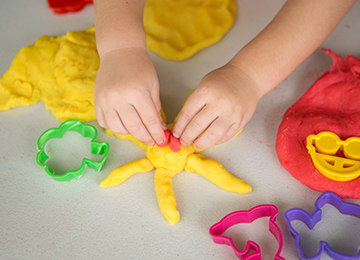
Fine and gross motor skills are necessary to complete most daily tasks. Fine motor skills involve the smaller muscles of the hands and gross motor skills involve bigger muscles throughout the body. Tasks that may be challenging could involve holding and playing with toys, scissor skills or pencil skills.
School Readiness
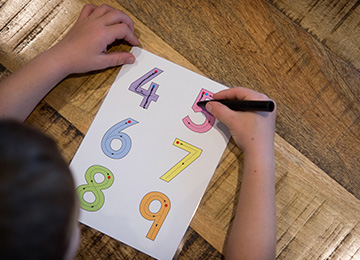
Children need to demonstrate proficiency in their organisational skills, behaviour, attention and concentration, as well as their fine motor skills, to enable independence for attending school.
Play & Social Skills
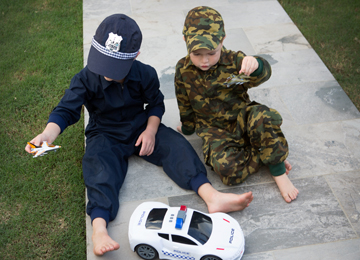
Children require skills to play creatively and interact with other children appropriately. It is also necessary for children to manage their emotions while interacting with others.
Self Care
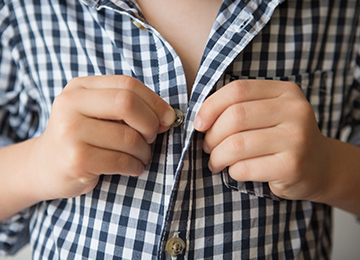
Independence in daily tasks is required for children to look after themselves. This includes feeding and eating, dressing and toileting skills.
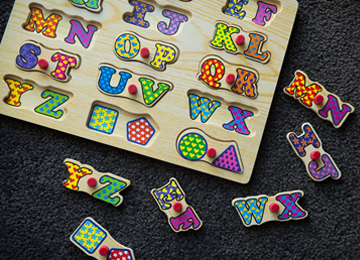
Visual Perceptual Skills and Motor Skills for Tasks
These skills are important for identifying what is being seen by our eyes and how this relates to the completion of a task. This could involve completing puzzles and mazes, identifying numbers and letters, or being able to copy and produce neat handwriting.
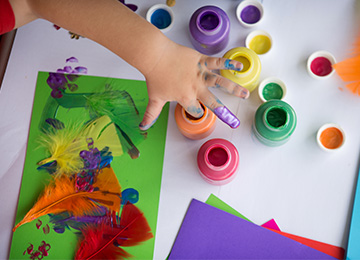
Sensory Processing
This is how we understand our environment and react to different stimuli. A range of behaviours may be observed when there are either over or under sensitivities when reacting to the stimulus, such as loud noises or messy textures.